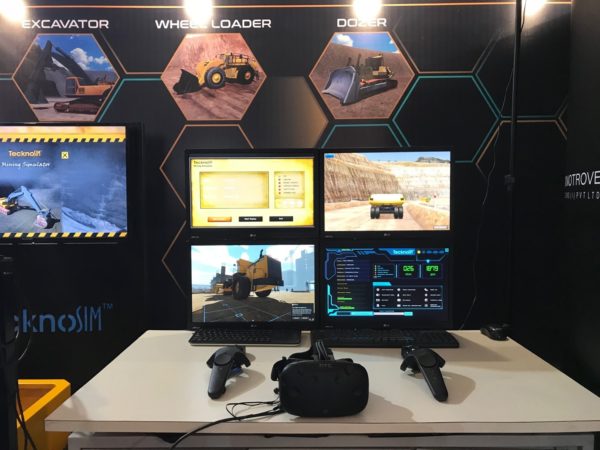
Example of Virtual Reality Simulator by Tecknotrove
The dangers of mining operations are very well known . Inadequate training is often a root cause for many mining fatalities. Hands-on training in an actual mining environment provides only limited real-life opportunities, however virtual reality-based training can expose the workers to real-world working conditions without the associated risks. Hence there is a strong demand for Virtual Reality (VR ) in the mining industry, especially for solutions that can help in training the mining operators effectively to improve safety , increase productivity and reduce costs.
Virtual Reality (VR) training in mining allows training the entire team of mining operators, workers, managers in order to make the entire mining process safe and more effective. Training in VR makes it possible to allow teams to practice their skills before they start working in real-world mining sites.
How does VR training work ? By putting on the VR headset , one experiences a virtual environment that is similar to the mining site. New trainees and recruits get a better understanding of what is expected of them and how to handle different work situations. They can inspect every part of the site and even interact with the different virtual objects around them which directly leads to higher learning retention and better results. Experienced workers get trained on advanced skills and emergency situations. Custom mines developed in virtual environments which are actual replicas of mine sites are being used for accident reconstruction , emergency preparedness and safety training.
Currently, VR is being used in numerous scenarios in the mining industry, including:
- Mine site familiarisation training
- Emergency preparedness training
- Working in Confined spaces training ( Video Link )
- Training on equipment familiarisation & operations
- Training on machine inspection maintenance
The mining industry is also using VR for scenario based training . Three large-screen projection units create an underground coal mine in the UNSW School of Mining Engineering. Their program is scenario-based and requires trainees to answer various safety-related questions as they “move” through the mine and thereby the story. Trainers interact with the trainees to lead discussion and answer questions, and they can manipulate the progress of the training program.
HOW IS VR TRAINING BETTER THAN TRADITIONAL TRAINING
Allows Hands on training
There is only so much learning, traditional training can provide people. Videos and pictures do help them understand the right way to do things, however trainees don’t really understand how to do things at work unless they get to perform those procedures or tasks on the field. This can often lead to problems or bottlenecks at work as new employees may take anywhere between weeks to months to operate at their full potential. VR training gives people the opportunity to perform practical hands-on exercises as many times as they want before they get out on the field.
Allows to make mistakes and learn from them
When you give trainees a safe learning environment through VR training where they can make as many mistakes as they want and actually learn from the consequences of their mistakes, it directly leads to more learning opportunities and better results.
It also gives both instructors and trainees much-needed flexibility to solve different problems in different ways, in order to discover the best way forward. After all, even little improvements in productivity can go a long way.
Enables Higher learning retention
Hands-on and immersive learning directly leads to higher learning retention since trainees are able to better grasp concepts and hone their skills. As compared to classroom training, virtual reality training gives people the opportunity to get a more realistic job experience, allowing them to understand important concepts faster.
Its is Effective and Scalable Training
VR training enables effective learning at a lower cost and in less time than many traditional learning methods. The VR training technology allows the management to view and review the performance and training retention of each trainee with the help of the inbuilt objective assessments systems . Because of its portability , VR training becomes a highly scalable form of training as it allows you to deliver standardised training across multiple locations without the need for employees or trainers to travel to the location .
THE FUTURE OF THE MINING INDUSTRY LIES IN VR
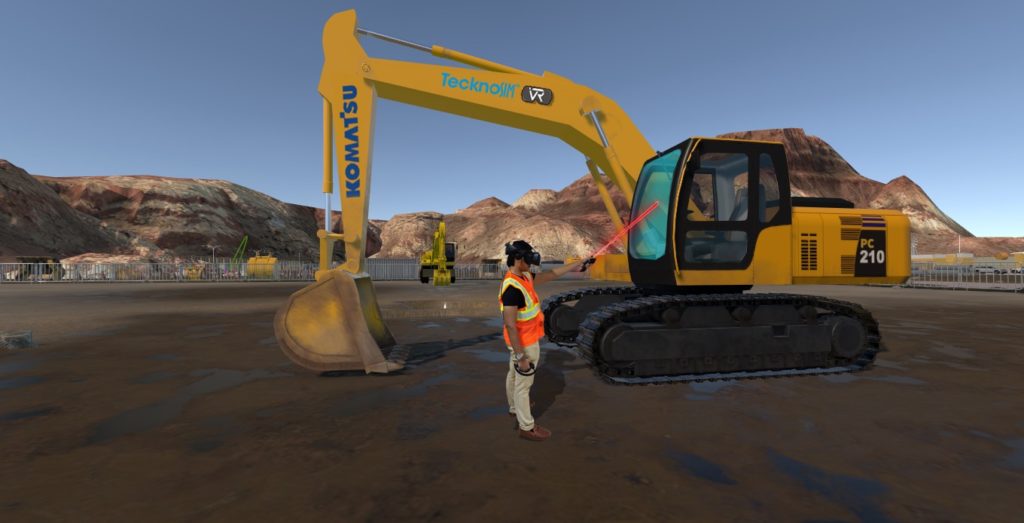
The potential of VR in mining is truly infinite. With even more advancements in VR technologies, it will not only help mining related companies in planning better strategies but also lead to a safer work environment for everyone involved.
As one of Asia’s leading VR training & simulation companies, Tecknotrove has vast experience in developing cutting edge solutions for the mining industry for both surface mines and underground mines . Tecknotrove develops customized virtual training solutions for critical training applications for the mining industry. “We develop fully customized VR training solutions that are capable of offering immersive learning experiences which can directly lead to higher productivity and efficiency in mining operations”, says Shantanu Gupta – Director Tecknotrove Systems. Tecknotrove has worked with some of the largest mining companies in the world including Debswana Mines, Rio Tino, Sesa Goa . They also work with some of the largest OEMS like Komatsu, Caterpillar, BEML, Volvo to name a few.
For more information you can reach them on www.tecknotrove.com