Stretching across the Democratic Republic of Congo and Zambia, the Copperbelt remains one of Africa’s most strategically important mining regions. As copper operations expand in scale and move deeper underground, mining companies are facing increasing pressure to improve operational reliability, reduce unplanned interruptions, and protect personnel. In this context, permanent vertical access systems are gaining importance as part of long‑term mining infrastructure.
Downtime Beyond Production Equipment
Downtime in mining is commonly associated with failures of production equipment such as crushers, mills, or conveyors. However, restricted or unreliable access to shafts, underground levels, headframes, and processing structures can be just as disruptive. When personnel, tools, or spare parts cannot reach work areas efficiently, maintenance activities take longer, response times are delayed, and indirect production losses accumulate.
As Copperbelt operations increase in depth and complexity, vertical access is increasingly recognised as a critical enabler of productivity rather than a secondary support function.
Limitations of Temporary Access Solutions
Temporary access systems are often used during construction and early development phases. While suitable for short‑term requirements, these systems are not typically designed for continuous, life‑of‑mine operation. As infrastructure evolves, temporary systems often require dismantling, relocation, and re‑certification, each of which introduces planned downtime.
In addition, temporary access equipment is more exposed to harsh mining conditions such as dust, humidity, and heavy usage. This increases the likelihood of wear‑related failures and unplanned stoppages. Capacity limitations can also result in congestion during shift changes and maintenance activities, creating productivity losses that are not always recorded as formal downtime.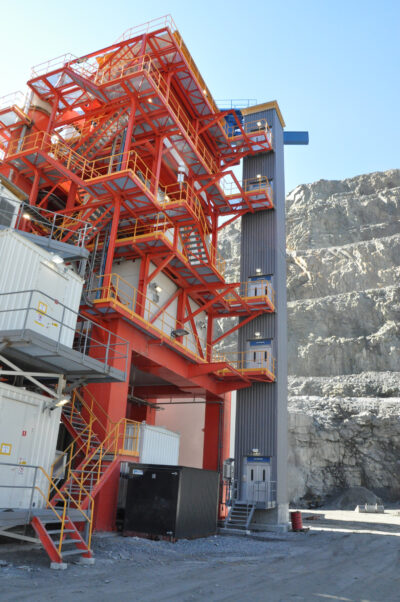
Permanent Vertical Access as Core Infrastructure
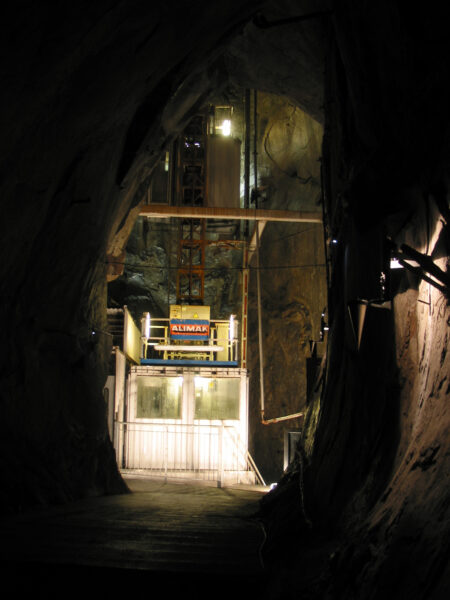
Permanent elevator systems are engineered as fixed mining infrastructure, intended to operate throughout the life of the mine. Installed once and retained from development through to production, they eliminate repeated installation cycles and the associated access interruptions.
By improving reliability and reducing planned shutdowns, permanent vertical access provides consistent availability to shafts and underground areas. Fixed guide systems, robust structural design, and defined maintenance regimes contribute to predictable operation and improved planning certainty for operations and maintenance teams.
Selecting the Right Elevator Technology
Mining operations across the Copperbelt present a wide range of vertical access challenges, from deep underground shafts to tall surface installations such as headframes, crushers, and processing plants. To address these varying requirements, permanent vertical access solutions typically include both rack and pinion and traction elevator technologies.
Rack and pinion elevators are well suited to demanding mining environments where heavy‑duty operation, robustness, and adaptability to changing shaft depths are essential. Traction elevators are commonly applied where high travel heights, smooth operation, and energy efficiency are priorities. Selecting the appropriate technology for each application helps ensure reliable access, reduced downtime, and safe movement of personnel throughout the mine lifecycle.
Reduced Downtime Through Predictable Access
One of the key benefits of permanent vertical access is the reduction of hidden downtime. Faster and predictable movement of personnel enables maintenance teams to respond more quickly to breakdowns and conduct inspections efficiently. Improved access encourages routine maintenance to be carried out as scheduled rather than deferred due to access constraints.
In deep shaft environments typical of Copperbelt operations in both Zambia and the DRC, reduced travel times also minimise delays at shift changes and improve overall workflow efficiency, supporting smoother daily operations.
Emergency Escape and Operational Resilience
Beyond daily operations, permanent vertical access plays a critical role in emergency preparedness. In the event of incidents such as fires, power interruptions, or underground emergencies, reliable vertical escape routes are essential. Permanent systems can be designed with emergency operation modes that enable the controlled evacuation of personnel when primary access routes are compromised.
Effective emergency escape capability not only enhances workforce protection but also supports faster incident resolution, reducing the risk of extended shutdowns linked to safety incidents or regulatory intervention.
A Long-Term Approach for the Copperbelt
For mining operations across the Copperbelt region of the DRC and Zambia, permanent vertical access offers a long‑term solution to both downtime reduction and emergency readiness. By integrating reliable access and escape infrastructure into mine planning, operators can improve operational predictability while strengthening safety and resilience.
As Copperbelt mines continue to modernise, permanent vertical access is increasingly being recognised as a strategic investment in productivity, safety, and long‑term mine performance.
For more information on permanent vertical access and emergency escape solutions for mining applications, visit www.alimak.com.