Morag Evans, CEO of Databuild
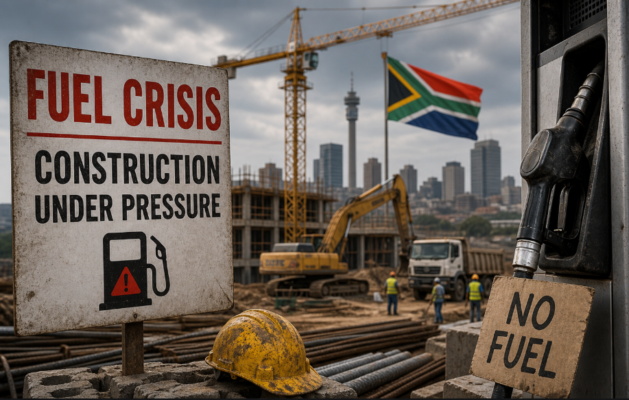
At the beginning of the year, there was cautious optimism that the construction environment, while still constrained, might at least become more predictable. That feeling did not last. Within weeks, the Iran conflict and disruption to global energy markets pushed fuel prices sharply higher. The knock-on effects have cut through the entire construction delivery chain, from plant and transport to materials, labour allocation, and project timelines.
Fuel increases are often treated in isolation, but they affect how materials move, how equipment operates, how sites are resourced, and how schedules are managed. A delay in transport becomes a delay in execution. What we are seeing across the market is not just higher costs but increasing strain on project viability.
There is a persistent assumption in the industry that if a cost increase is large enough or external enough, there must be a way to recover it. Unfortunately, the reality works differently. Construction contracts do not respond to pressure, but to what was agreed.
If mechanisms such as CPAP are included, there is a structured way to absorb some of the increase, even if it lags behind real-world pricing. If they are excluded, the position becomes far more difficult. The contractor carries the risk unless there are very specific grounds for recovery. That is often misunderstood, but it is how the system works.
How contracts are managed
What became clear in recent industry discussions is that the issue is not only the fuel price increase itself. It is how unprepared many projects are to deal with it. Too often, contractors move straight to recovery without interrogating the contract. Notices are submitted late or not at all. Records are incomplete. Claims are built retrospectively instead of in real time.
By the time the financial impact is fully visible, the contractual position is already compromised. The result is predictable. For instance, claims are rejected, disputes escalate, and cash flow becomes even tighter.
The uncomfortable truth
There is also a deeper issue that the sector does not always want to confront. When a contractor signs a contract without escalation provisions, they are effectively making a call on future conditions. Sometimes that call works. Sometimes it does not.
If it is the latter, there is limited room to renegotiate the outcome afterwards. Courts have consistently upheld the principle that parties are bound by the agreements they enter into. A poor commercial outcome is not, on its own, grounds for relief. That is difficult in a market where margins are already thin. But it reinforces the reality that risks that are not priced or allocated upfront resurface during execution.
Recovery options
That does not mean there are no options available for contractors. Where delays are caused by factors attributable to the employer, there may be scope to recover costs through expense and loss provisions. Where supply disruptions affect programme timelines, extension-of-time claims may apply.
But these are conditional. They depend on causation, compliance, and documentation. They are not general remedies for rising fuel costs. That distinction is important as it separates what feels fair from what is contractually enforceable.
Facing the reality
What this moment highlights is not just volatility in fuel prices but also a structural weakness in how risk is understood and managed across projects. Too often, fuel is not treated as a defined risk. It is priced into rates but not actively managed during execution. When conditions change, the response is reactive.
That approach is no longer sustainable. We are moving into an environment where certain inputs, fuel among them, are too volatile to ignore. They need to be treated differently. That may mean more deliberate use of escalation mechanisms, more flexible contractual provisions, or earlier engagement between employers and contractors when conditions shift. It will certainly require better discipline in how contracts are administered.
Fuel price volatility may eventually stabilise, but the exposure it reveals will remain. This is not just a cost event, but a test of how well projects are structured, how contracts are understood, and how effectively risk is managed in practice.
For many contractors, the difference between surviving this cycle and being forced out of it will not come down to the fuel price itself. Rather, it will be defined by whether the contract was treated as a formality or as the project’s operating system from the start.