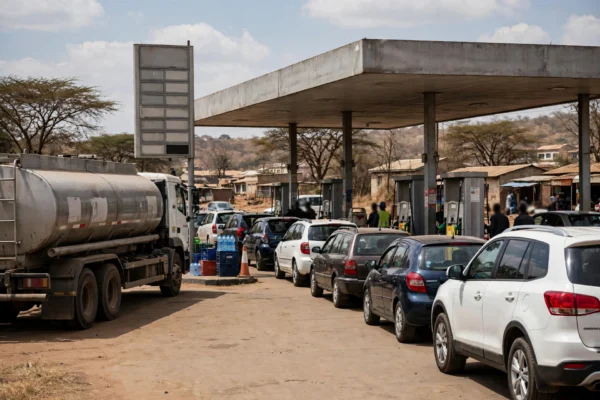
The Zambian Government has defended recent increases in fuel prices, attributing the rising costs to global geopolitical tensions, particularly instability in the Middle East, while insisting that the country’s pump prices remain among the lowest in the Southern African Development Community (SADC).
“The international oil market disruptions, including tensions surrounding the Iran conflict and insecurity along the Strait of Hormuz, have contributed significantly to the increase in fuel prices,” said Whitney Mulobela, State House Chief Communications Strategist.
Zambia, which relies entirely on imported refined petroleum products, remains vulnerable to fluctuations in international oil prices and exchange-rate movements.
Disruptions along the Strait of Hormuz, a critical global oil transportation route through which a significant proportion of the world’s crude oil passes, have further heightened supply concerns.
Mulobela acknowledged that the increases have placed considerable pressure on households, businesses, farmers and transport operators, resulting in higher transportation and production costs that could eventually translate into increased prices of goods and services.
“The Government previously introduced temporary tax relief measures between April and September 2026 to protect consumers from the impact of rising international fuel prices,” he said.
The measures involved suspending excise duty on petroleum products and zero-rating Value Added Tax (VAT) on fuel. According to the Government, the intervention cost the Treasury approximately US$200 million in revenue forgone.
The relief measures, together with the Energy Regulation Board’s (ERB) price-smoothing mechanism, helped keep pump prices relatively stable during the period.
However, Mulobela explained that the tax relief was introduced on the assumption that international oil market conditions would stabilise within a short period.
“With geopolitical tensions persisting, the Government faced the challenge of balancing further consumer protection against the need to finance essential public programmes,” he said.
He added that maintaining open-ended fuel tax relief would undermine funding for programmes such as free education, the Constituency Development Fund (CDF), school feeding initiatives and social cash transfers.
Other measures
Consequently, excise duty was reinstated in October, while VAT is scheduled to return on December 1, 2026, under a phased approach.
Following the restoration of fuel taxes, the ERB announced further adjustments to pump prices for November. Petrol increased from K31.46 to K33.06 per litre, while diesel rose from K33.27 to K34.45 per litre. Kerosene increased to K32.08, while Jet A-1 rose to K34.51 per litre. The new prices took effect at midnight on October 31.
The ERB attributed the adjustments to rising international petroleum prices and the depreciation of the Zambian kwacha by more than three per cent against the United States dollar. Average petrol prices on the international market increased from US$121.58 to US$125.84 per barrel during the review period.
Despite the increases, the Government maintains that Zambia’s fuel prices remain relatively competitive compared with those of several neighbouring countries. Mulobela cited regional comparisons showing that petrol prices in Malawi, Zimbabwe and South Africa were higher than Zambia’s K33.06 per litre.
President Hakainde Hichilema has also indicated that the Government intends to review the monthly fuel pricing mechanism administered by the ERB. The proposed review is expected to address concerns that frequent price adjustments make it difficult for households to plan their budgets and businesses to manage operating costs.
Longer-term strategies
Meanwhile, the Government is pursuing longer-term strategies to reduce Zambia’s dependence on imported petroleum products and strengthen national energy security.
Among the proposed investments is a US$1.1 billion refinery in Ndola, with a planned processing capacity of 60,000 barrels per day. The project is expected to be completed before the end of 2028. Government is also considering a 1,400-kilometre petroleum pipeline linking Angola’s Lobito refinery to Lusaka, alongside initiatives to promote local ethanol blending.
The establishment of a dedicated Ministry of Petroleum, headed by Makozo Chikote, is also expected to improve oversight and management of the country’s petroleum sector.
The Government says these interventions are intended to strengthen domestic fuel supply, reduce exposure to international market shocks and create a more sustainable petroleum pricing environment.
However, the immediate challenge remains balancing the need to protect consumers from rising fuel costs with the country’s fiscal responsibilities.
As global oil market uncertainties continue, motorists, transport operators and businesses are likely to remain concerned about the impact of fuel prices on the cost of living and the broader economy.