By: Miniotec
Vibration monitoring systems that analyse real-time equipment data in mining operations represent proven technology with documented returns on investment. Modern wireless vibration sensors can detect bearing failures in conveyor pulleys, motors, pumps, and gearboxes weeks before catastrophic breakdown occurs. Studies show predictive maintenance programs reduce unplanned downtime by 40-60% and deliver 10-30x ROI through prevented failures and optimised maintenance scheduling.
Yet despite these clear benefits, adoption of condition monitoring systems across mining operations remains surprisingly slow. As the industry faces an unprecedented workforce crisis, with 72% of miners worldwide over 35 years old and hundreds of thousands of workers Globally expected to retire by 2029, understanding why proven technology isn’t being implemented becomes critical. The answer resides not in the technology itself, but in the human dynamics that mining operations rarely discuss openly.
The Well-Documented Case for Vibration Monitoring
Established Benefits Mining Operations Already Know
Modern wireless vibration monitoring systems typically evaluate data from rotating equipment throughout mining sites. Rule based, and recently, AI-driven diagnostics, can automatically identify specific fault modes including bearing race defects, unbalance, misalignment, and looseness well before equipment failure occurs. This early fault detection capability gives maintenance teams the lead time needed for planned repairs rather than emergency responses.
Mining operations implementing predictive maintenance strategies report reducing manual vibration analysis from 80-120 hours monthly to just 8-10 hours for the same asset coverage. This efficiency gain comes from automated data collection and analysis that runs continuously rather than periodic manual readings. Early detection also prevents the exponential cost escalation of deferred maintenance, where a $100 bearing issue can easily become a $10,000 motor failure if left unaddressed.
These benefits are well documented and widely promoted. Industry publications cover them extensively. Equipment manufacturers advertise them. Corporate leadership mandates their implementation. So why does adoption of vibration monitoring systems remain slow across the mining sector? The answer reveals an uncomfortable truth about the gap between headquarters strategy and site reality.
Why Experienced Site Teams Resist What Corporate Leadership Mandates
The Skills That Built Careers Don’t Translate to Dashboards
Veteran maintenance personnel built their careers through decades of hands-on diagnostics in harsh mining environments. They can identify bearing problems by the sound of rotating equipment, detect misalignment through vibration felt by hand on motor housings, and diagnose gearbox issues from oil appearance and temperature. These tactile skills represent legitimate technical knowledge earned through years of experience working with crushers, screens, conveyors, and other mining machinery.
The challenge isn’t that this knowledge has become obsolete. The problem is that modern mining operations require continuous monitoring of hundreds of assets across distributed sites, which human senses cannot achieve at scale. For technicians who’ve diagnosed equipment failures through direct observation for 30 years, being asked to trust sensor data and automated algorithms feels like an implicit criticism of their proven methods. The unspoken message they hear is that their way doesn’t work anymore. Even when framed positively, the introduction of remote vibration monitoring systems suggests their skills are no longer sufficient.
The Corporate-Site Disconnect That Dooms Implementation
Research on technology adoption in mining confirms what operations quietly know. Research studies identify mining as an industry with conservative culture and structural resistance to change. More specifically, 73% of mining companies acknowledge digital skills gaps as a main barrier to implementing technology, yet 30% of organizations have no digital upskilling plan whatsoever. Another 45% only recently began training initiatives.
Corporate digital transformation roadmaps announce sensor deployments, set adoption targets, and measure installation completion. But site-level reality tells a different story. Vibration sensors get installed on conveyor systems and rotating machinery, monitoring dashboards go unused, automated alerts get ignored, and operations continue with traditional manual methods. Site teams often view corporate technology mandates as solutions to problems they don’t believe exist. From their perspective on the ground, current methods work adequately. Equipment runs, production continues, and failures get addressed when they occur – most times reactively or well before the equipment actually needs to be attended to.
The workforce shortage creating pressure at corporate levels isn’t perceived as their problem to solve at site level. That’s viewed as a corporate recruitment issue. There’s an unspoken tension running through many mining operations: headquarters sees innovation lagging and productivity gaps that threaten future performance, while sites see unnecessary disruption to proven practices that have kept operations running for decades.

Fear of Obsolescence in an Automating Industry
The resistance to condition monitoring programs runs deeper than simple preference for familiar methods. Mining personnel understand that automation genuinely does eliminate some traditional roles. When wireless vibration monitoring systems reduce manual data collection from 120 hours to 10 hours monthly through automated condition monitoring, the obvious question becomes: what happens to that freed capacity? Will maintenance positions be eliminated? Will experienced technicians be reassigned to less skilled roles?
Site personnel reasonably ask whether this technology will enhance their roles or replace them entirely. They see colleagues taking early retirement packages and positions remaining unfilled. Mining’s shift toward remote operations centres, autonomous equipment, and centralized monitoring creates legitimate concerns about job security for field-based maintenance staff. They’re being asked to facilitate a technological transition that may not include them in the future workforce.
Mining’s conservative approach to innovation, documented extensively in public literature on technology adoption barriers, stems partly from these legitimate concerns about the impact of automation on employment. The higher the level of automation achieved, research shows, the greater the resistance from those whose roles are most affected.
Technology Designed for the Real Adoption Challenge
Making Implementation About Workforce Capability, Not Replacement
The mining operations successfully deploying vibration monitoring systems frame the technology differently. They position it not as replacing technical knowledge, but as multiplying the impact of scarce expertise. One experienced maintenance technician using automated vibration analysis can effectively oversee 500+ assets versus the 50 they could manually analyse each month. This isn’t about eliminating their role. It’s about making their scarce skills reach further across more equipment and using the same time they have available on value adding tasks, not mundane activities.
Modern gateway-free wireless systems address practical adoption barriers directly. Installation requiring five minutes rather than weeks of infrastructure work means site maintenance teams can deploy sensors themselves on conveyor pulleys, motor bearings, and gearboxes without waiting for specialized contractors. AI-driven fault diagnostics that identify specific failure modes reduce the interpretation burden, but experienced personnel still make the final maintenance decisions based on their knowledge of equipment history and operating conditions.
The technology handles the repetitive data collection work, freeing technical experts for higher-value diagnostic analysis and root cause investigation. As one maintenance manager noted in recent industry discussions: “We don’t need our most experienced people walking routes with data collectors. We need them solving the complex problems that sensors can identify but only humans can fix.”
Implementation That Sites Actually Accept
Successful adoption requires acknowledging workforce realities honestly rather than avoiding difficult conversations. Mining operations facing 87% difficulty recruiting qualified maintenance personnel cannot wait for new hires to arrive. According to Australian mining industry reports, major operators consistently struggle to find suitably qualified people, and this shortage will only worsen as retirement waves accelerate over the next five years.
Manual condition monitoring programs cannot scale to meet production demands with shrinking maintenance teams. The choice facing mining operations isn’t between automated systems and traditional methods. It’s between automated vibration monitoring systems and having critical equipment go unmonitored entirely as workforce constraints intensify.
Starting predictive maintenance programs with obvious pain points where manual monitoring already proves inadequate builds credibility with sceptical site teams. Involving maintenance personnel in sensor placement decisions for their equipment gives them ownership of the implementation. Training programs that position monitoring systems as amplifying expertise rather than replacing it address legitimate concerns about obsolescence.
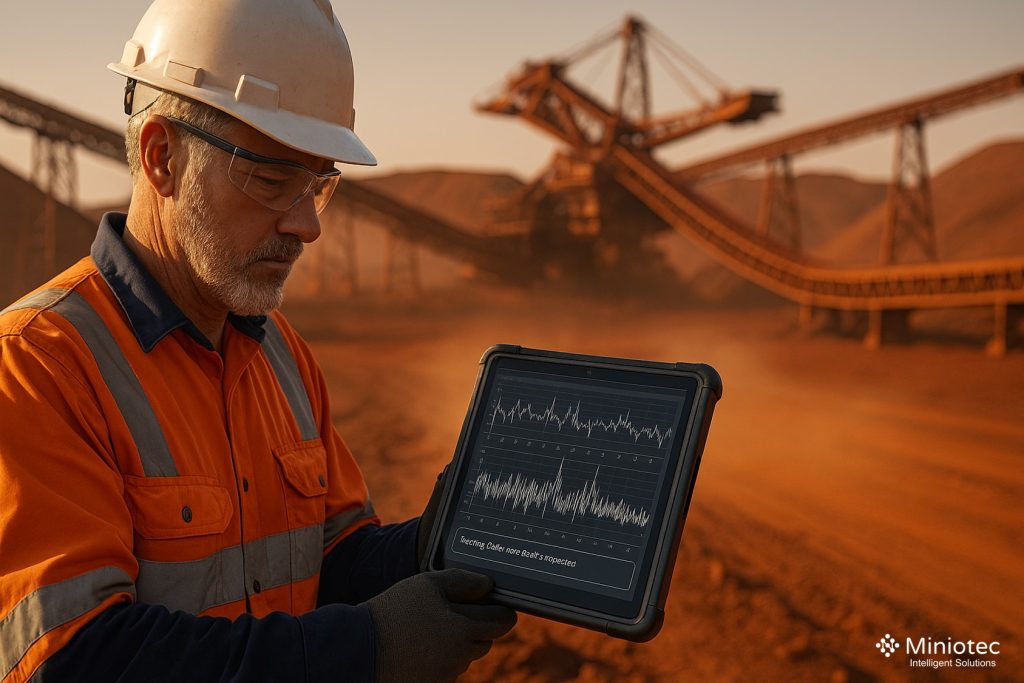
When experienced technicians see wireless technology letting them mentor junior staff remotely while monitoring equipment they previously had to access physically in hazardous locations, resistance often transforms into advocacy. The technology becomes a tool that makes their jobs safer and their knowledge more valuable across more assets.
The Path Forward
Vibration monitoring adoption in mining has stalled not because the technology fails to deliver value, but because implementation approaches ignore fundamental human factors. As the workforce crisis intensifies with experienced maintenance personnel retiring faster than replacements can be recruited or trained, the mathematical reality becomes unavoidable. Mining operations cannot maintain production targets with manual condition monitoring programs and shrinking maintenance departments.
The technology exists and works reliably in harsh mining environments. The return on investment through prevented failures and reduced downtime is proven across hundreds of implementations. What’s needed now is honest acknowledgment that successful adoption happens only when vibration monitoring systems enhance the capabilities of experienced site personnel rather than threatening their relevance. Mining operations that frame predictive maintenance as a workforce solution, not just a technology project, will successfully navigate the transition ahead.
Sources:
- OECD Mining Workforce Demographics Report
- AusIMM Future Workforce Survey
- com Industry Analysis on Technology Adoption Barriers
- BCG Digital Acceleration Index for Mining Industry
- Miniotec: “Improving Maintenance Productivity, Even During a Resource Squeeze”