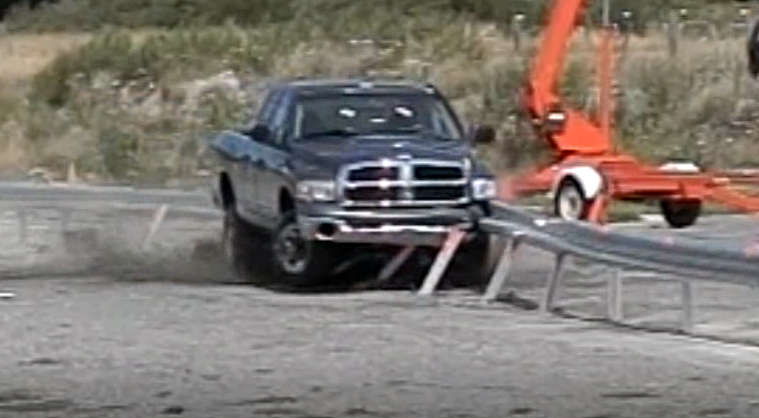
Ezy-Guard – pickup is safely contained and redirected
When building a new road, or even when auditing an existing road, we follow good road design practice. We ensure suitable, well maintained road surfacing and drainage. We consider the right posted speed limits for the straights and curves; providing additional lighting and signage to warn of intersections or other possible hazards. We even make efforts to keep animals off the road. But, often not enough thought and consideration is given to what happens for when things go wrong, and a vehicle leaves the road.
Vehicle Restraint Systems, typically referred to as barriers are the crucial last line of defense to providing road safety when that happens. The consequence of not using one or using the wrong one could be fatal, or at least seriously life changing; sometimes to several people in just one collision incident! But, when selecting the barrier to use, do we really know enough about them to enable the proper selection and implementation? Just placing a “standard” barrier by the side of the road is not the solution.
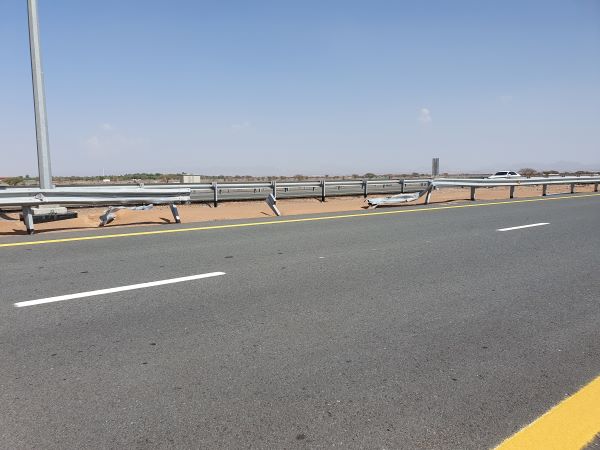
Several aspects must be considered when selecting the right barrier solution and these are determined by the hazard that we are protecting the road user from, the environment, the expected traffic (both type and density) and economic constraints.
Longitudinal barriers that we see at the roadside should be crash tested, typically to either of the two most referenced international standards. These are the European, known as EN1317, or American, known as MASH or previously NCHRP350. Both refer and test based on road going vehicles commonly used within those territories. A key difference, which is important to the Mining market, is that the American testing includes performance testing using a pickup. Very important because the bakkie and other 4X4 vehicles that are so common on roads leading to the mines, are by nature taller, so have a higher center of gravity, and will interact with your intended barrier system very differently to a car or truck.
Using a crash tested barrier system that is suitable for the type of vehicle and posted speed limit on the roadway is the only way that you can ensure that it will work in the moment of need. Crash testing helps you determine the required performance parameters needed for proper placement. If the barrier performance is unknown and not suitable, then it could fail and become a more serious hazard than the one that you are trying to protect the road users from, such as causing the vehicle to jump, roll over, redirect aggressively into oncoming traffic, or even for the structure of the barrier to spear the passenger cabin! Selecting an untested or unsuitable barrier is not only dangerous, but simply money wasted.
It is important to begin by looking at the desired vehicle containment level, typically decided by the type of vehicles and the posted speed limit. Then reviewing the hazard to be protected from, the available space to place the barrier system, and then considering the environmental conditions and budgetary constraints.
Barrier systems may be chosen to be permanently installed, for long term protection, or temporarily installed to protect for a short to medium time frame, such as portable barriers used in work zones or when future upgrade works are planned.
Looking at permanent barriers – they may be very rigid, which is ideal where there is little room for barrier deflection or its working area (known as “working width”), but the trade-off is a higher likelihood of injury to vehicle occupants through a harder collision, determined by the Accident Severity Index (ASI). Such barriers could be concrete barriers, or very well anchored steel barrier systems. On the other side of the spectrum, there are flexible systems, such as high-tension cable barriers. These have the least impact severity, and are typically cheaper to install, but then need more working width for redirection of the impacting vehicle. In the middle of this choice sit the semi-rigid systems like the steel guardrail options, which offer a reduced working width, typically reasonable cost, but may have an increase in the ASI.
Regarding temporary barriers, the options are concrete, portable steel barrier systems or portable water-filled plastic, with some hybrid variants. The concrete and plastic options are free standing and reliant on the system weight to redirect a vehicle. Portable steel options are typically anchored into the ground which can provide flexibility to vary the working width and control the ASI of the barrier.
Highway Care will provide correct product selection advice based on sound principals of Engineering, product crash testing data and in-field performance knowledge. The best advice being that which is tailored specific to the project’s specific requirements. Our industry knowledge and contacts combined with our product portfolio enables us to ensure suitable solutions are used and that you have the confidence in their performance.
Contact: Highway Care …………