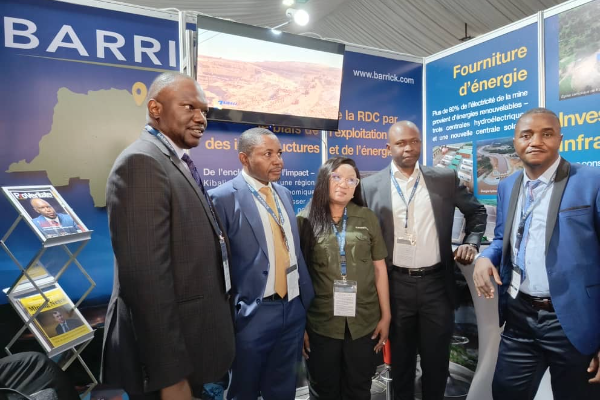
Kibali Gold Mine—Barrick Gold’s flagship joint venture in northeastern DRC—underscored its commitment to positioning mining as a beacon of sustainable, low-carbon energy leadership across Africa during the second day of DRC Mining Week 2025 event.
A cornerstone of Barrick’s strategy, Kibali’s energy overhaul was outlined by electrical engineer Jean‑Paul Ilunga Mbayo, who walked attendees through the mine’s evolution from diesel-dependent operations toward a diversified renewable energy portfolio.
Initially powered by a 43 MW diesel generator complex, Kibali has methodically phased in clean energy. Its portfolio now includes three hydroelectric stations: Nzoro 2 (22 MW, 2015), Ambarau (10.3 MW, 2016), and Azambi (10.1 MW, 2018), providing more than 80% of the mine’s energy needs and significantly curbing carbon output.
To stabilize the micro‑grid amid fluctuating demands—particularly spikes driven by the mine’s vertical shaft winch—Kibali installed a battery energy storage system. This innovation reduces generator run-time and boosts reliance on hydro power, contributing to lower operational costs.
Expanding its renewable frontiers, Kibali commenced a feasibility study in 2020 for a 19 MWp solar plant with 15 MW/30 MWh battery backup near the Ambarau site. Construction began in 2024, aiming for operation in Q2 2025. The project projects a six-year ROI with an internal rate of return of 21% and annual energy savings of $11.34 million—underscoring both environmental and financial gains.
Looking ahead, Kibali is planning further upgrades: boosting Nzoro 1’s capacity, adding water storage to Nzoro 2 for year‑round hydropower resilience, and preparing new hydroelectric sites to meet rising energy demands. A hydrogen pilot project is also underway to enhance generator efficiency and slash fuel use by 10–12%.
Barrick reports Kibali ended 2024 with its strongest annual throughput to date and holds a dominant cost position. A new 16 MW solar plant and battery system—planned by June 2025—will reduce fuel use by 53% and raise renewables in its energy mix from 81% to 85%, allowing six months of pure renewable operation annually.
Beyond energy, Kibali has injected over $5.7 billion into the Congolese economy, including $3 billion spent with local businesses. It maintains stringent environmental and safety standards, holds ISO 14001 and 45001 certifications, and invests 0.3% of its revenue in community development—funding 41 of 44 planned projects in 2024 alone ($4.4 million).
Kibali’s clean‑energy transformation fits within a broader national agenda. Country director Cyril Mutombo emphasized the importance of energy and basic infrastructure support to amplify mineral‑sector benefits and propel local-lead economic growth.
Kibali’s systematic shift from fossil fuels to solar and hydro power—with microgrid intelligence and storage—positions it as a blueprint for sustainable mining in Africa. The mine is demonstrating that environmental responsibility and economic prosperity can coexist, even enhance each other. As Kibali enters six months of reliance on renewables annually, it presents a compelling case: strategic energy investment not only slashes carbon emissions—it also drives profitability, local jobs, and community advancement.