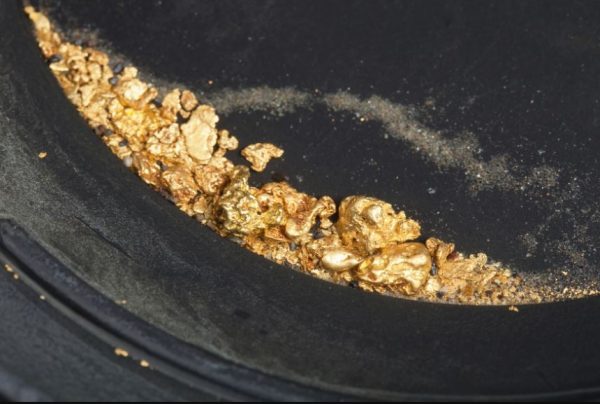
Kenya has taken a major step toward redefining its position in East Africa’s minerals economy following the announcement of a US $5.29 billion gold discovery in Kakamega County, in the country’s western region.
The announcement comes after local media reports confirmed that the deposit, located at the Isulu Bushiangala site in the Lirhanda Corridor, contains an estimated 1.27 million ounces of gold.
The UK-listed firm Shanta Gold Kenya Limited (SGKL) said the project “is aimed at obtaining the required authorisation to mine the Isulu-Bushiangala gold resources for economic purposes.”
The company added: “This may lead to the enhancement of local economic development through job and business opportunities and significant contributions to the Government of Kenya through taxes, royalties and revenue contributions, which are likely to transfer into the local and regional economic growth.”
Recasting Kenya’s mining identity
According to local media, the EIA (Environmental Impact Assessment) submitted to the National Environment Management Authority (NEMA) outlines infrastructure including a 1,500-tonne-per-day processing plant, a 12-megawatt power station, and underground mining in a zone spanning approximately 337 acres.
This discovery positions Kenya to pivot from being a marginal player in gold production to potentially emerging as a serious contender in East Africa. Local reports note that Kenya currently produces only a few hundred kilograms of gold annually, and the find thus marks a shift toward large-scale commercial mining.
A turning point for artisanal miners
While excitement is high, there is concern over how this discovery will affect the thousands of artisanal miners working informally in western Kenya.
The EIA anticipates the displacement of roughly 800 households as land acquisition covers large swathes of private and public land.
SGKL’s General Manager, Jiten Divecha, emphasised the company’s standards: “A world-class underground operation that meets global safety and sustainability standards.”
A mining engineer quoted by the media offered this perspective: “This discovery confirms what many in the field have long suspected, that western Kenya holds world-class gold potential. With the right infrastructure and regulation, Kenya could move from exploration to full-scale production faster than many expect.”
The challenge will be formalising artisanal miners into the value chain without leaving them behind, especially as commercial miners move in.
Communities and revenue expectations
The media reports indicate that Kenya is expected to receive about KSh 801 million (≈ US$6 million) in initial royalties and levies from the discovery once production begins.
Under Kenya’s upcoming mining regime, 3 % of gross gold sales go to the government as royalties, of which 20 % is remitted to the county and 10 % to host communities. Local articles note that SGKL will contribute 1 % of the gold output value directly to host communities via a Community Development Agreement.
The reports highlight concerns over resettlement, land rights and environmental safeguards—particularly given the proximity to the Kakamega Forest and important water catchments. “There is apprehension and fear of forceful evictions from ancestral lands,” states the EIA summary cited by media.
Regional implications and outlook
The discovery not only changes Kenya’s narrative but could also alter the regional mining map. Analysts quoted in the media say Kenya’s favourable infrastructure – including port access via Mombasa and better connectivity – may make it an attractive alternative to more established gold producers in the region.
Still, the estimated value reflects resource potential, not guaranteed revenue. Experts warn that operations, commodity prices, regulatory approvals and community relations will determine the actual economic benefit.
The path ahead
Kenya has crossed an important threshold. With the discovery at Isulu-Bushiangala, the country now has the chance to turn mineral potential into meaningful development. But whether this becomes a model of responsible mining or another missed opportunity will depend on management, governance and inclusive benefits.
Local media will be watching closely — and so should the communities, investors and policymakers who stand to gain or lose.