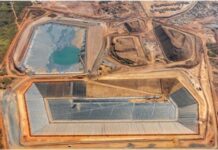
First Quantum Minerals says its Kansanshi copper mine in Zambia is on track to process approximately 27 million tonnes of ore in 2026, exceeding the plant’s design capacity by 8%, as annual copper production is expected to nearly double to about 277,000 tonnes.
According to a Reuters report published on 21 October, the mine’s strong equipment availability, utilisation and milling performance have enabled it to surpass its throughput target, highlighting the impact of the company’s $1.2 billion S3 expansion, which was commissioned in August 2025.
The expansion introduced a new sulphide processing line designed to handle 25 million tonnes of ore annually, more than doubling Kansanshi’s previous processing capacity. The mine is now processing substantial volumes of lower-grade sulphide ore, making higher throughput essential to sustaining and increasing copper production.
The projected output of 277,000 tonnes represents a significant increase from previous production levels and reinforces Kansanshi’s strategic importance to First Quantum Minerals and Zambia’s wider mining industry.
Zambia’s Growing Copper Ambitions
Zambia produced 890,346 tonnes of copper in 2025 and aims to increase annual output to three million tonnes by 2031. Achieving that target would require production to rise to approximately 3.4 times last year’s level, placing growing pressure on mining companies to expand capacity, improve operational efficiency and address infrastructure constraints.
Kansanshi is central to this ambition. Zambia accounted for approximately 93% of First Quantum’s group copper output in 2025, following the suspension of its Cobre Panama operation in 2023.
The mine’s improved performance therefore carries implications beyond its immediate operations, particularly for the country’s export earnings, mining supply chains and regional trade infrastructure.
Transport Corridors Face Growing Pressure
However, increased mine production does not automatically translate into faster or more efficient exports. Zambia’s copper industry relies on regional transport corridors whose capacity, border procedures and port performance can influence how quickly metal reaches international markets.
A Freight News analysis published in August identified Dar es Salaam, Lobito, Durban, Walvis Bay, Beira and Nacala among the routes serving Zambian and Congolese copper exports. Durban, historically a major outlet, faces growing exposure to delays and logistical risks, increasing the importance of alternative routes.
First Quantum’s latest update did not provide specific details on power supply, smelting capacity or transport arrangements. Nevertheless, higher ore processing and copper output could increase demand for reliable road, rail and port services.
For Southern African Development Community (SADC) logistics operators, the development presents an opportunity to secure additional mining-related freight. Operators that establish contracts with miners and traders, diversify across multiple export corridors and plan for border and port delays may be better positioned to handle rising volumes.
As Zambia pursues its three-million-tonne copper ambition, the ability to move production efficiently to international markets will remain as important as expanding capacity at the mine.