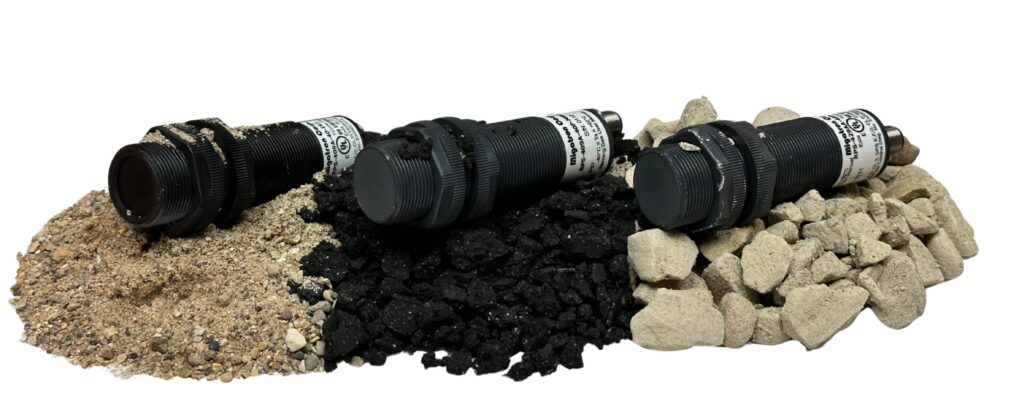
Mining operations present some of the most demanding sensing conditions in the industry. Dust, vibration, confined spaces, and the presence of flammable gases such as methane create an environment where both reliability and safety are critical. In these conditions, standard sensing technologies are often insufficient. Intrinsically safe ultrasonic sensors provide a solution by combining precise, non-contact measurement with certified safe operation in hazardous areas.
Intrinsic safety ensures that electrical energy within a device is limited to levels that cannot ignite explosive atmospheres, even under fault conditions. For mining environments, this protection method allows sensors to operate continuously in areas classified as hazardous, without requiring bulky explosion-proof enclosures.
Conveyor Belt Alignment Monitoring
One of the most common applications for intrinsically safe ultrasonic sensors in mining is conveyor belt alignment monitoring. Conveyors transport material over long distances, often through underground tunnels or enclosed structures where dust and gas accumulation is possible. Misalignment of the belt can lead to friction against structural components, increasing the risk of heat generation and potential ignition.
Ultrasonic sensors are mounted near the edges of the belt to measure its lateral position in real time, detecting the distance to the belt edge without physical contact. This allows continuous monitoring without the wear issues associated with mechanical tracking devices.
Because ultrasonic sensing is unaffected by dust and lighting conditions, it provides stable measurements even during heavy material transfer. When paired with a control system, the sensor data can be used to automatically correct belt position, reducing maintenance requirements and improving operational safety.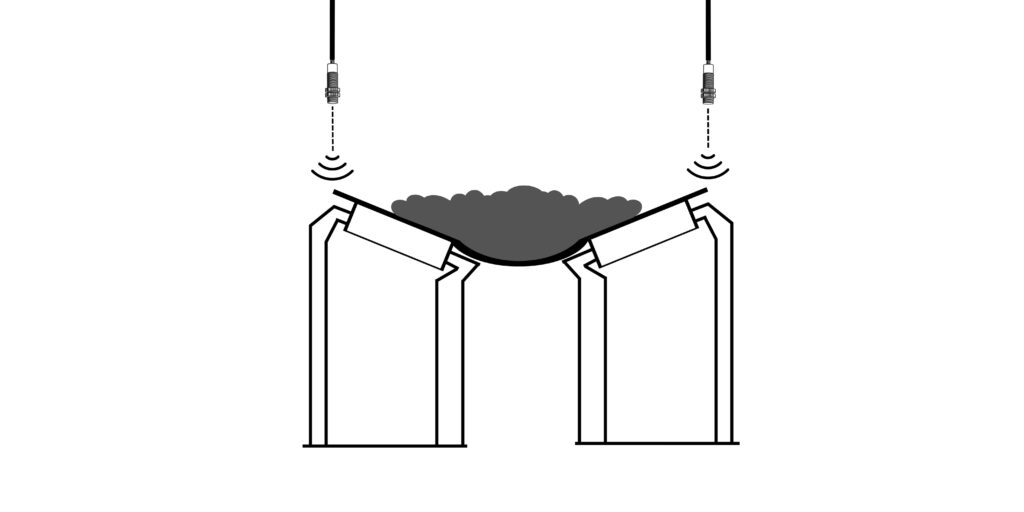
Material Level Monitoring in Bins and Hoppers
Another critical application is material level monitoring in bins, hoppers, and transfer points. Maintaining accurate level measurement is essential to prevent overfilling, blockages, or inconsistent material flow, all of which can disrupt production and create unsafe conditions.
Intrinsically safe ultrasonic sensors are typically mounted above the material surface, where they continuously measure the distance to the material using sound waves. This non-contact approach avoids issues related to material buildup, abrasion, or mechanical failure.
In hazardous mining environments, the ability to perform this measurement safely is just as important as accuracy. Intrinsically safe designs allow sensors to remain energized while monitoring levels in areas where combustible dust or gases may be present, ensuring continuous operation without compromising safety.
Enabling Safe and Reliable Automation
Ultrasonic sensors also integrate easily into modern control systems. Their analog outputs can be fed directly into programmable logic controllers, enabling real-time monitoring and automated responses. This supports closed-loop control strategies that improve both efficiency and safety across mining operations.
By combining non-contact measurement, resistance to harsh environmental conditions, and intrinsic safety, ultrasonic sensors play a key role in modern mining systems. As operations continue to prioritize automation and risk reduction, intrinsically safe sensing technologies remain essential for maintaining both productivity and safe working conditions.