South African mines operate under constrained conditions. With a notable slowdown in new discoveries since the 1990s, they have become experts at working with dispersed and mixed-grade deposits. They continue to invest smartly through technology and extract more from tougher conditions. However, those investments have to be very targeted and produce real value.
It’s essential that water technology providers know how to back mines in finding and developing high-value water systems, says Chetan Mistry, Xylem’s Strategy and Marketing Manager – WSS (Africa, Middle East, Turkey, India).
“South Africa is a water-stressed country. Even though mining water usage is comparatively small to other sectors and has remained largely stable, mines face several challenges.
Water availability is becoming more challenging in many regions due to factors such as population growth, climate variability, and increasing demand. Most mining happens in arid regions, so they are leveraging technology to improve their efficiency and control over water. There are many options on the table, but which is best for a particular scenario? This is where the water technology sector can help organisations evaluate options and identify solutions aligned with their operational priorities.”
Helping mines pinpoint water investments
Water is present across the mining lifecycle. It starts at the sourcing stage for functions like cooling, dust suppression, and dewatering. Processing is the most water-intensive area, especially where milling and crushing turn rocks into slurry. The third stage, storage and discharge, manages considerable amounts of water.
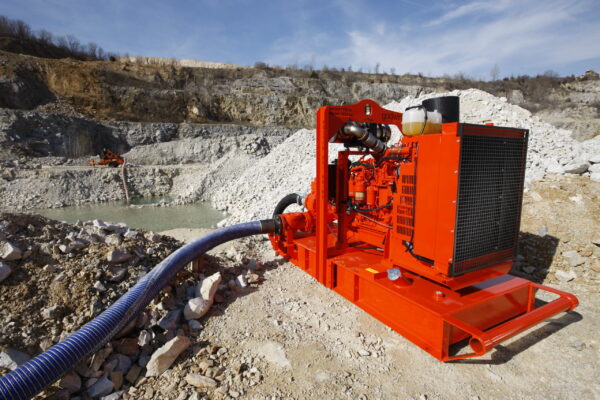
Each stage has different water management opportunities. For example, at the sourcing stage, dewatering pump systems are crucial for continued uptime and improving safety; treatment solutions provide efficiency and reuse opportunities during processing; and storage/discharge areas use water testing to meet compliance standards.
A solution in one area can apply elsewhere. Heavy-duty slurry pumps are present across the journey, and treatment can serve “good enough” water for dust suppression and cleaning. Some solutions, such as digital monitoring, can support decision-making across multiple stages of the mining lifecycle.
This spread reveals mining’s water conundrum. There are ample opportunities to improve water-related processes at a mine, but facing high costs from complex operations and dwindling site lifespans, what are the best investments?
“Mines know what they want or what they don’t have. Their challenge often lies in prioritising opportunities and selecting solutions that align with operational requirements, investment priorities, and business objectives,” says Mistry.
Expect more from water partners
Mines may share many of the same issues, but each faces a unique collection of priorities and circumstances. They need water technology partners that can understand their goals and find the right mix of products and services to reach those goals.
“Many mines value partners that can support projects from initial assessment through implementation and ongoing optimisation. It isn’t about selling a pump or a sensor. Success depends on understanding the challenge, evaluating the value of potential improvements, and designing solutions that align with compliance requirements, operational needs, and budget constraints,” says Mistry.
A solution can range from rapidly sourcing and installing equipment parts to deploying emergency dewatering systems to developing a water treatment service in stages. It may require a proof of concept, retrofit, or a rental service that sidesteps capital expenditure. The choices on hand start with a water technology partner that listens, understands, and focuses on the mine’s priorities.
South African mines are operating under constrained and difficult conditions, and they need water improvements where it matters most. Find out how Xylem meets those expectations by visiting its stand (Hall 5, Stand H18) at Electra Mining Expo 2026, 7-11 September at Nasrec in Johannesburg, and chatting to its experts. From collecting water intelligence to exploiting energy efficiency and water recycling, Xylem helps mines develop water systems that make sense.