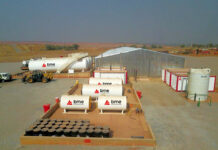
The newly $100 million Chisamba solar plant in Zambia is set to offer stable power supply for the country’s mining operations.
The project, built by the Chinese state-run energy giant PowerChina and financed by Zambia’s national utility ZESCO will supply power to First Quantum Minerals, a company partly owned by Jiangxi Copper Company of China.
Completed as Zambia’s largest grid-connected solar facility to date, the first 100 megawatt phase was delivered at a cost of US $100 million and commissioned in June 2025.
This offers hope in a country beset by rolling blackouts lasting up to 17 hours a day as it marks a significant milestone in the nation’s bid to diversify its energy mix away from drought-prone hydropower.
Developed by ZESCO’s subsidiary, the Kariba North Bank Extension Power Corporation (KNBEPC), with PowerChina executing engineering, procurement, and construction, the plant was largely completed before formal financial closure — an unusual move in African infrastructure deals.
Financing came through a creative blend: KNBEPC and ZESCO each contributed US $30 million in equity, while Stanbic Bank Zambia provided a US $71.5 million loan, secured through a Power Purchase Agreement (PPA) with GreenCo Power Services.
GreenCo then entered a Power Supply Agreement to deliver blended, firm energy to First Quantum Minerals (FQM) — enabling ZESCO to redirect equivalent electricity to domestic users, helping alleviate load-shedding.
The plant’s first phase comprises some 182,000 bifacial solar panels—capable of absorbing sunlight from both sides—making it Zambia’s most ambitious solar deployment yet.
Observers point out, though, that reaching Zambia’s target of 1,000 MW of solar capacity by 2025 would require about two million such panels—posing logistical and procurement challenges.
Though the Chisamba plant powers critical mining infrastructure, its benefits to ordinary Zambians remain limited. Rural communities still face unreliable electricity provisions, and many homes endure prolonged blackouts.
Generating capacity is prioritized for industrial users, reflecting mining’s outsized role in Zambia’s economy, contributing over 70 percent of exports, most foreign investment, and roughly a quarter of government revenue.
The energy sector also bears witness to shifting financing models. With Chinese overseas lending receding, Zambia has turned to domestic institutions like local banks and its National Pension Scheme Authority to fund energy projects.
While innovative, analysts warn that without stronger governance and a crackdown on illicit financial flows—estimated to cost the country up to US $5 billion annually—the impact of such infrastructure will be constrained.
Looking ahead, plans are already underway for a second 100 MW phase at Chisamba, which would double capacity, bolster energy security, and further support both industrial and domestic demand.
The Chisamba solar plant thus stands as both a beacon of progress and a mirror of persistent trade-offs: a state-of-the-art clean energy project built under unconventional financing to keep mines operating, even as many citizens continue to go dark. Zambia’s energy transition is underway—but ensuring it serves all Zambians remains the ultimate test.