The Democratic Republic of Congo (DRC)’s cobalt market is heavily reliant on artisanal supplies for purposes of balance. This is, however, proving to be a costly venture since the supplies have become harder to track and audit due to a higher incidence of local processing.
George Heppel, senior analyst, CRU Group, in a webinar organized by the DRC Mining Week in conjunction with Mining Review Africa said that the difficulties in tracking and auditing of the supplies are because since 2016, artisanal ore is blended and processed into cobalt hydroxide. Previously, artisanally mined (ASM) cobalt was traditionally shipped directly to China in the form of concentrates, making it easy to trace.
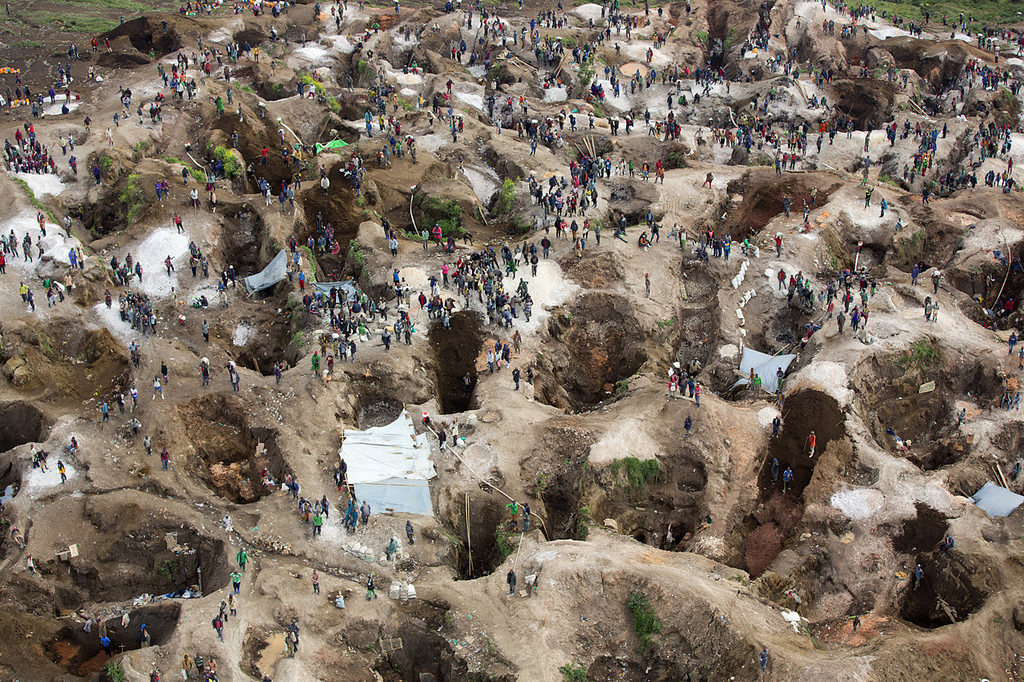
As ASM accounts for between 20%-40% of cobalt production from the DRC – which in turn supplies two thirds of total global production of the minor metal and employs as many as 200,000 people there – it is impossible to ignore. This, according to the head of corporate responsibility of global trader Trafigura James Nicholson, makes ASM all the more vital to the cobalt sector. Typically, the ASM supply chain has been opaque: individual miners often sell to local cooperatives, who sell on to local merchants and traders, then onto international traders, the webinar participants noted.
Electric vehicles
Cobalt is a key ingredient in batteries used in electric vehicle and mobile phones. Prices for cobalt more than doubled in 2017 to more than $75,000/mt after the Paris Agreement led the market to believe that EVs would quickly become the rage, and as copper production – cobalt is produced by major miners as a by-product of copper – failed to keep up with demand growth. With greater market stability, even despite COVID-19 mine and transport disruptions, its LME cash price is currently US$ 29,500/mt, just slightly lower than its February average of US$ 32,987.50/mt, its highest point so far this year.
ASM accounted for around 10% of 2019’s global supply of around 15,000 mt of cobalt and possibly 20% of the world’s minerals overall, according to the webinar participants. Furthermore, and according to Heppel, the world would have been in a gigantic cobalt deficit had ASM not increased in 2018, because non-artisanal supply shrank due to curtailed copper production in the previous year.