


The Joburg Indaba SA Mining Hall of Fame was launched in 2016 as a way of recognising and honouring some of the legendary individuals who have significantly influenced the South African mining industry over many years.
As an industry, we know too well our unique legacy and challenges and we believe we struggle to celebrate some of the significant progress that has been made towards transformation and renewal. The SA Mining Hall of Fame celebrates key role players in our industry, role models that young South Africans can look up to.
The Hall of Fame currently has 14 esteemed members. Tonight, two more mining legends join them: Welcome aboard Mxolisi Mgojo and Neal Froneman!
MXOLISI MGOJO
AS if it’s hard enough mining a mineral most of the world would prefer not to use, Mxolisi Mgojo spent a chunk of his management at coal miner Exxaro Resources toiling with Eskom and Transnet. Imagine running a company where your customer and your main supplier are as dysfunctional as they. You’d probably not accept it, but then you’re not Mxolisi Mgojo for whom Exxaro represents a life’s work. He and his predecessor Sipho Nkosi were part of the Eyesizwe Coal team that helped put the company in its present form. It has been a lifelong commitment; in fact, Mgojo even spoke of Exxaro’s relationship with Eskom as “like a marriage”.

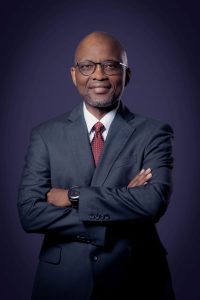
All marriages need passion to keep them alive. Speaking at Exxaro results presentations, Mgojo would become so involved that he occasionally struck a preacher’s tone, especially when he was urging resiliance in the wake of Government failings. When not negotiating state deficiencies, Mgojo was also transforming Exxaro, and in quite fundamental ways.
Firstly, he sought to lessen the company’s reliance on Eskom by attempting to lift its exposure to export markets. Secondly, he read the sea-change regarding coal very early. His response was to speed up the exploitation of the giant Grootegeluk, knowing that in years to come demand for coal would diminish. Thirdly, Mgojo set about refocusing Exxaro’s long-term future. Out went – eventually – the titanium and base metal assets and in came some rather controversial decisions.
In a 2018 presentation, Mgojo shared some of his strategic thinking with analysts regarding Exxaro’s custodianship of land, agriculture, and water. These were highly innovative ideas but the strategy lacked the detail analysts wanted to see while they also fretted about the firm’s core coal business. To be honest, they were spooked and Exxaro shares took a minor beating. Mgojo never made that mistake again, but he continued to work on the strategy nonetheless.
Three years later, it befell Mgojo’s successor Nombasa Tsengwa to outline a diversification plan in which the company would more aggressively drive into renewable energy whilst also weighing up acquisition of minerals such as vanadium and manganese which both have exposure to the future-facing mobile and stationary battery market. It clearly had Mgojo’s fingerprints on it although, to be honest, Exxaro had long been thinking in terms of energy transition. Cennergi had been formed by Exxaro in 2012 suggests the Eyesizwe brains’ trust long knew the company had to start looking beyond coal.
Apart from driving change at Exxaro Mgojo was also a two-term President of the Minerals Council. Just as business transformation was key to his work at Exxaro, so it was a factor at the council, then known as the Chamber of Mines. He presided over the organisation’s transformation which had something of a stuffy feel to it previously. Today, the council is far more relevant, far more outspoken in terms of representing mining in society. It may be not outspoken enough for some, but it’s a fitter organisation – thanks to Mgojo.
NEAL FRONEMAN
As a self-confessed petrolhead, Neal Froneman may appreciate an analogy used to describe another Hall of Fame inductee, Brian Gilbertson. In it, Gilbertson is compared to a Formula One car: he might have a few scrapes on the way, but he’d get to his destination very quickly. That’s an apt way to look at Froneman’s career whose Sibanye-Stillwater, incidentally, turns ten this year.
It’s yet to emerge whose idea it really was to demerge Gold Fields’ SA mines into Sibanye Gold, the forerunner to Sibanye-Stillwater. Regardless, it proved hugely significant. It enabled Gold Fields CEO Nick Holland to focus on the firm’s growth assets while Froneman was officially back in the big time.
He’d spun off the track in 2008 when his plans to build a global uranium business, modestly called ‘Uranium One’, fell foul of an unexpected market downturn. Somewhat bruised but defiant, Froneman returned with ‘Gold One’ but – to be honest – it was rats and mice compared to Sibanye Gold. Its giant Driefontein and Kloof mines, along with Beatrix were of a collective scale that provided Froneman the perfect platform for his ambition and famed appetite for a deal.
“I’m not a ‘Pacman'”, he told journalists when asked he’d if he’d reprise the empire-building of Uranium One at Sibanye Gold. He then preceded to buy up huge pieces of the PGMs sector including the R30bn Stillwater Mining takeover requiring a $1bn rights issue – one of the largest the JSE has ever seen.
To be fair, though, it seems as if Froneman realised soon after 2012 that having stabilised the gold mines his company would need a long term investment story. But the PGM acquisitions also enabled Froneman to set right the miscalculation he’d made with uranium. In fact, calling the PGM market proved a company-making moment if ever there was one; a moment of genius.
Whether that extends to battery metals is yet to be seen. A mere two years after concluding the last of the PGM deals – the takeover of Lonmin – Froneman was back at it in typical fashion. Two lithium projects, a nickel refiner, and a base metals retreatment firm. What’s critical in these transactions, however, is they meaningfully take Sibanye-Stillwater international.
That’s because of geology certainly, as well as the intention to participate in the downstream battery market in Europe but one can’t help the strategy is informed by Froneman’s relationship with Government, which has been stormy.
A pity of the SA mining market is its CEO are too polite, too cautious of causing an upset. Some call Froneman’s public condemnations of SA’s dysfunction reckless; but it could also be called leadership – a style that will be sorely missed if and when he retires.
There has been some speculation in media that Froneman is thinking of returning to Florida where he spent much of the Covid lockdown. As a mere 60-something that seems way too premature. What will Joseph Mathunjwa have to fight about if that happens? And what about that gold merger involving AngloGold and Gold Fields? So many deals, so little time.