


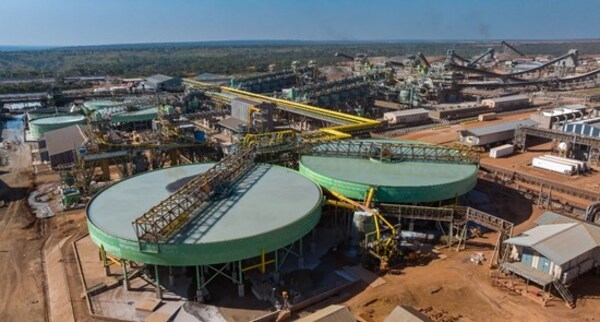
Canadian mining company Ivanhoe Mines reported copper production of 64,328 tonnes from its flagship Kamoa-Kakula Copper Complex in the Democratic Republic of the Congo during the second quarter of 2026, with the company forecasting a significant production increase in the second half of the year.
The company said the complex produced 61,134 tonnes of copper in concentrate from its Phase 1, 2 and 3 concentrators during the quarter, while the on-site smelter generated 62,072 tonnes of copper anode.
An additional 2,256 tonnes of copper blister were produced by the Lualaba Copper Smelter, resulting in total quarterly production of 64,328 tonnes of saleable copper products.
Production during the quarter was affected by lower milling volumes, with the three concentrators processing a combined 2.97 million tonnes of ore compared with 3.11 million tonnes in the first quarter.
However, overall copper recovery rates improved to 87.4%, up from 85.6% in the preceding quarter, while the average feed grade also rose slightly to 2.39% copper.
Ivanhoe maintained its 2026 production guidance of between 290,000 and 330,000 tonnes of copper from Kamoa-Kakula, citing higher mining rates and the planned release of concentrate inventories as key drivers of improved performance in the second half of the year.
The company plans to increase mining rates across the Kamoa mines by 30% to approximately 700,000 tonnes per month, equivalent to an annualized mining rate of 8.5 million tonnes. The increase is expected to provide additional ore to the concentrators and support higher copper production levels.
Executive Co-Chair Robert Friedland and President and Chief Executive Officer Marna Cloete said the company expects the operation’s performance to improve as mine development activities continue and concentrate inventories are processed.
Kamoa-Kakula’s smelting operations also continued to gain momentum during the quarter. Africa’s largest copper smelter produced 112,307 tonnes of high-strength sulphuric acid, a by-product that is increasingly becoming an important revenue stream for the operation.
The company said July contracts for sulphuric acid had been priced at approximately US$840 per tonne, representing record pricing levels. Approximately 11,300 tonnes of acid remained in inventory at the end of June.
The company is targeting copper anode production of around 850 tonnes per day during the second half of the year, equivalent to an annualized rate of approximately 300,000 tonnes, or around 60% of the smelter’s design capacity.
Ivanhoe said further increases beyond this level are currently constrained by concentrate availability, with full smelter capacity of 500,000 tonnes per annum expected to be achieved by 2028.
To support its long-term growth strategy and reduce operating costs, Kamoa-Kakula is also expanding its renewable energy infrastructure. Commissioning of a 60-megawatt on-site solar photovoltaic facility with battery energy storage is underway and is expected to be completed during the third quarter of 2026.
The company also plans to double on-site solar capacity to 120 MW by the end of 2027 through additional projects being developed with energy partners.
Kamoa-Kakula, located in the Central African Copper Belt, has grown into one of the world’s largest and highest-grade copper mining operations since commercial production began in 2021.
The mine produced a record 388,838 tonnes of copper in 2025 and generated revenues of US$3.28 billion, underscoring its strategic importance to the global copper market amid rising demand driven by the energy transition and electrification trends.